
endon injuries are among the most frustrating challenges for horse owners and trainers. They take time, patience, and the right approach to heal properly. That’s where red light therapy (photobiomodulation) comes in – a non‑invasive, science‑backed tool that can significantly speed up tendon healing and improve the quality of repair.
Whether you’re dealing with a suspensory ligament strain, a bowed tendon, or a chronic issue, red light therapy offers a practical way to support your horse’s recovery journey.
Why Tendons Are Tricky to Heal
Tendons connect muscle to bone and are made primarily of collagen fibres. They have a limited blood supply, which means they receive fewer nutrients and oxygen than muscles do. This poor vascularity makes tendon injuries slow to heal and prone to re‑injury.
Traditional treatments – rest, anti‑inflammatories, and controlled exercise – are essential, but they often don’t address the underlying cellular sluggishness. That’s where red light therapy steps in.
How Red Light Therapy Helps Tendons
Red and near‑infrared light penetrate the skin and reach deep into the tendon tissue. Once absorbed by the mitochondria inside cells, they boost ATP production – the energy cells use to repair and regenerate. This triggers a cascade of beneficial effects:
1. Stimulates Collagen Production
Collagen is the building block of tendons. Red light activates fibroblasts (the cells that produce collagen), leading to stronger, more organised tissue. This helps the tendon heal with better structural integrity, reducing the risk of re‑injury.
2. Reduces Inflammation and Swelling
In the acute phase, inflammation is necessary but can become excessive. Red light modulates inflammatory responses – lowering pro‑inflammatory cytokines while increasing anti‑inflammatory mediators. This reduces swelling and pain without masking the injury.
3. Improves Blood Flow and Oxygenation
Even though tendons have poor circulation, red light encourages the formation of new capillaries (angiogenesis). Better blood flow means more oxygen and nutrients reach the damaged area, accelerating the healing process.
4. Minimises Scar Tissue Formation
Scar tissue is less elastic than normal tendon tissue. Red light promotes more organised collagen alignment, reducing adhesions and helping the tendon retain its flexibility and strength.
5. Relieves Pain Naturally
By blocking pain signals at the nerve level and releasing endorphins, red light provides comfort without the side effects of oral painkillers – especially valuable for competition horses subject to medication rules.
Recommended Protocols for Tendon Recovery
Tendon healing is a long process, and treatment should be adjusted according to the phase of recovery.
| Phase | Frequency | Session Duration | Notes |
|---|---|---|---|
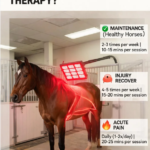
| Acute (first 7 days) | Daily | 10–12 minutes | Focus on reducing inflammation; keep sessions short but consistent. |
| Subacute (weeks 1–4) | 5–6 times per week | 8–10 minutes | Begin to stimulate collagen production; monitor for any setback. |
| Remodelling (weeks 4–12+) | 3–4 times per week | 8–10 minutes | Promote tissue strengthening; gradually reintroduce controlled exercise. |
| Maintenance (ongoing) | 2–3 times per week | 5–8 minutes | Prevent re‑injury and support ongoing tendon health. |
Important: Always clean and dry the treatment area before each session. Hold the device 1–3 cm from the skin (check your product manual). For long tendons, divide the area into overlapping zones to ensure full coverage.
Combining Red Light with Other Therapies
Red light therapy is most effective when used as part of a comprehensive rehabilitation programme. Consider pairing it with:
- Controlled exercise – as recommended by your vet or physiotherapist.
- Cold therapy – in the acute phase to minimise swelling.
- Massage and stretching – once the acute inflammation subsides.
- Nutritional support – high‑quality protein, vitamin C, and omega‑3s to support tissue repair.
- Veterinary treatments – such as shockwave, stem cell therapy, or PRP (platelet‑rich plasma) – red light complements these without interference.
Real‑World Outcomes
Many equine practitioners report noticeable improvements when they incorporate red light into tendon rehab:
- Faster return to soundness.
- Reduced recurrence of injuries.
- Less reliance on systemic medications.
- Improved overall comfort and willingness to work.
While individual results vary, the growing body of evidence and clinical experience makes red light therapy a trusted adjunct in modern equine practice.
For ODM/OEM Partners: Your Opportunity
If you’re considering entering the equine therapy device market, tendon recovery is one of the most compelling applications you can address. Here’s what we can offer:
- Customised devices – wavelengths (e.g., 660nm + 850nm), power output, and treatment heads tailored to your target audience.
- Private labelling – your brand, your packaging, your story.
- Flexible MOQ – we support both small test runs and large‑scale production.
- Full technical support – from sample prototyping to certification (CE, FCC, RoHS).
We’re not just a manufacturer – we’re your partner in bringing effective, trustworthy tendon recovery solutions to the equine market.
A Final Word
Tendon injuries test our patience, but with the right tools, recovery is not only possible – it can be better than before. Red light therapy offers a safe, non‑invasive, and scientifically grounded way to support that journey. If you’d like to learn more about our devices, request clinical data, or discuss customisation options, we’re just a message away.
Let’s help horses heal – together. 😊