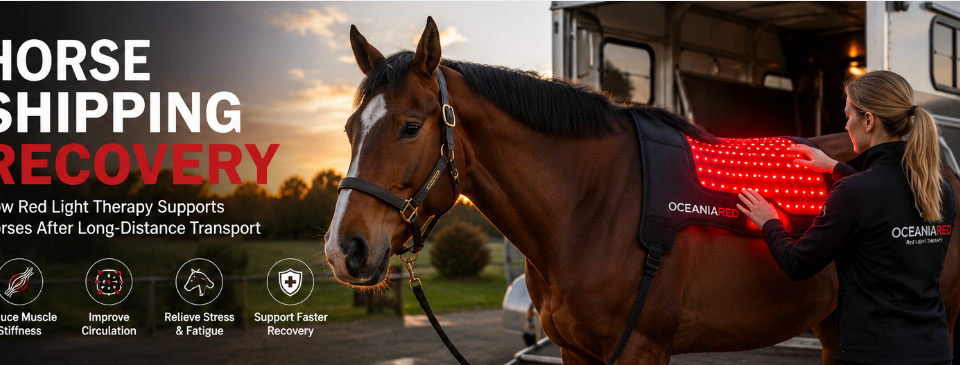

Transporting horses over long distances is an unavoidable part of modern equine management. Whether attending competitions, relocating to a new stable, or traveling for breeding purposes, horses often spend hours inside trailers or transport vehicles.
Although transportation is routine, it places significant physical and mental stress on horses. Extended periods of standing in a confined space can contribute to muscle stiffness, reduced circulation, dehydration, fatigue, and temporary discomfort. Proper recovery helps horses return to training safely and comfortably.
Many horse owners and equine professionals now include red light therapy as part of their post-transport recovery routine because it provides a non-invasive way to support muscle relaxation and circulation.
Why Transport Is Stressful for Horses
During transportation, horses constantly adjust their balance as the trailer accelerates, brakes, and turns. This continuous muscular effort may lead to:
- Muscle fatigue
- Back stiffness
- Neck soreness
- Reduced flexibility
- Temporary stress
Long-distance travel may also affect circulation and hydration, making a structured recovery routine essential.
Common Signs of Shipping Fatigue
After transportation, horses may experience:
- Muscle stiffness
- Reduced range of motion
- Fatigue
- Mild swelling in the legs
- Temporary stress
- Reduced appetite
Recognizing these signs early helps horse owners provide timely recovery support.
How Red Light Therapy May Help
Red light therapy uses specific wavelengths of red and near-infrared light to stimulate cellular activity through photobiomodulation.
Potential benefits include:
Supporting Healthy Circulation
Improved circulation helps deliver oxygen and nutrients to muscles after transportation.
Helping Relax Tight Muscles
Hours spent balancing inside a trailer can create muscle tension. Red light therapy may help promote relaxation.
Supporting Overall Recovery
Many owners use red light therapy as part of a complete recovery routine that also includes hydration, rest, and gentle walking.
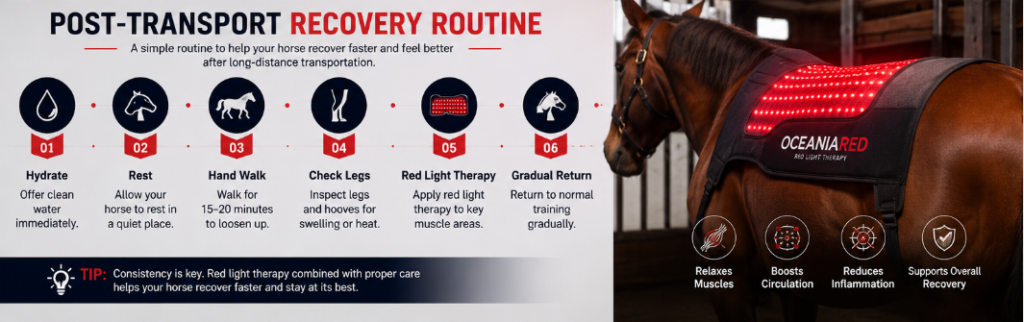
Recommended Recovery Routine
- Offer fresh water immediately.
- Allow the horse to rest.
- Hand walk for 15–20 minutes.
- Check legs and hooves.
- Apply red light therapy to:
- Back
- Neck
- Hindquarters
- Hocks
- Resume normal training gradually.
Frequently Asked Questions
How soon after transport can I use red light therapy?
Most owners begin treatment shortly after the horse has settled and relaxed.
How long should each session last?
Typical sessions last between 15 and 30 minutes.
Which areas should be treated?
The back, neck, shoulders, hindquarters, and hocks are common treatment areas after transport.
Can red light therapy replace veterinary care?
No. It should be considered a supportive wellness tool and not a replacement for veterinary diagnosis or treatment.
Is it suitable for performance horses?
Yes. Many competition horses include red light therapy in their regular recovery programs.
Conclusion