
Winter can be one of the most challenging seasons for horse owners. Lower temperatures, frozen ground, shorter daylight hours, and increased time spent in the stable all affect a horse’s health, comfort, and performance. Whether you own a performance horse, a pleasure horse, or a senior companion, proper winter management is essential for maintaining mobility and overall wellness.
Cold weather often causes muscles and joints to become stiffer than usual. Horses may warm up more slowly before exercise, become less flexible during training, and recover more slowly afterward. Older horses or those with previous injuries are especially susceptible to seasonal discomfort.
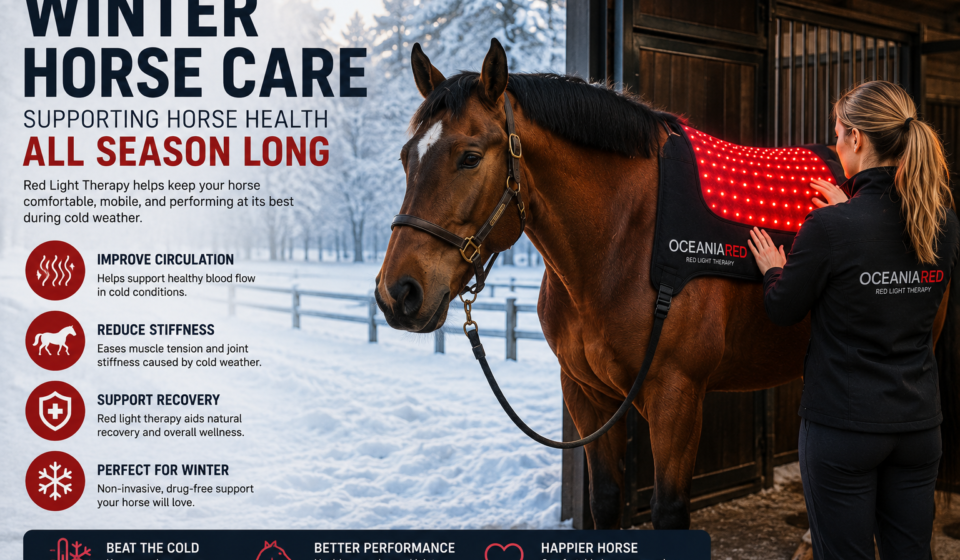
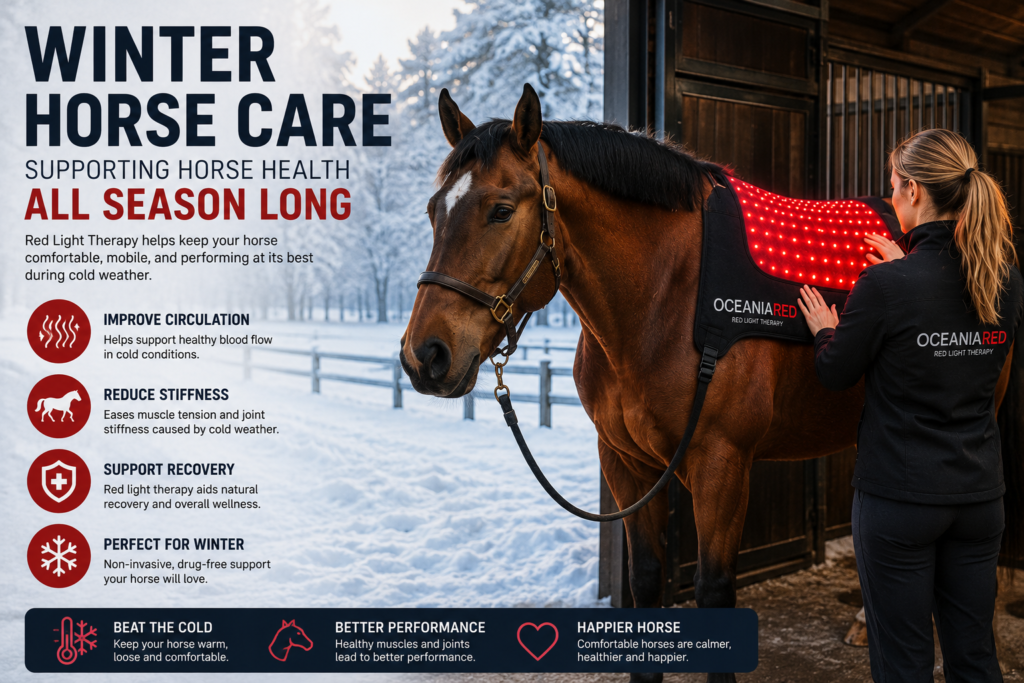
Fortunately, modern equine management combines traditional winter care with innovative technologies. One increasingly popular solution is veterinary-grade red light therapy, which supports healthy circulation, muscle relaxation, and natural recovery without medication or invasive treatment.
In this guide, you’ll learn how winter affects horses, common cold-weather challenges, and practical strategies—including red light therapy—to help your horse stay comfortable throughout the season.
Table of Contents
- Why Winter Is Challenging for Horses
- Common Winter Health Problems
- Why Muscle Recovery Matters in Cold Weather
- How Red Light Therapy Supports Winter Horse Care
- Daily Winter Care Routine
- Common Mistakes Horse Owners Make
- Frequently Asked Questions
- Conclusion
Why Winter Is Challenging for Horses
Although horses naturally tolerate cold temperatures better than excessive heat, winter introduces several management challenges that should not be overlooked.
Reduced temperatures slow muscle elasticity. Tendons and ligaments require more time to warm up before exercise, increasing the risk of stiffness and minor strains.
During winter, horses often spend more time inside the stable due to icy conditions or poor weather. Reduced movement decreases circulation and may contribute to muscle tightness.
Frozen or uneven footing also limits exercise opportunities, making regular conditioning more difficult. In addition, cold weather increases energy requirements, meaning horses burn more calories simply to maintain body temperature.
Common winter stress factors include:
- Cold temperatures
- Reduced turnout
- Less natural movement
- Frozen or slippery footing
- Longer warm-up times
- Dry winter air
- Limited sunlight
Understanding these seasonal challenges helps owners create an effective winter care program.
Common Winter Health Problems
Every horse responds differently to cold weather, but several issues become more common during winter months.
Muscle Stiffness
Cold muscles contract more easily, reducing flexibility and increasing soreness after exercise.
Joint Discomfort
Older horses often experience increased joint stiffness during colder weather, particularly in the hocks, knees, and fetlocks.
Reduced Circulation
Less movement combined with cold temperatures may temporarily reduce blood flow to muscles and soft tissues.
Longer Recovery Time
Performance horses frequently require additional recovery after winter training sessions.
Dry Skin and Coat
Winter air can dry the skin and coat, requiring additional grooming and nutritional support.
Why Winter Recovery Is Important
Proper recovery is just as important during winter as it is after competition.
Allowing muscles to relax after work helps horses remain comfortable while maintaining flexibility throughout the season.
An effective recovery program may include:
- Proper warm-up
- Appropriate cool-down
- Regular turnout
- Balanced nutrition
- Adequate hydration
- Massage
- Red light therapy
By combining these practices, horse owners can reduce seasonal stiffness and support consistent performance.
How Red Light Therapy Supports Winter Horse Care
Red light therapy has become increasingly popular among veterinarians, rehabilitation specialists, and competitive horse owners.
Using specific wavelengths of red and near-infrared light, photobiomodulation supports normal cellular function and healthy circulation.
Potential wellness benefits include:
Supporting Healthy Blood Flow
Healthy circulation delivers oxygen and nutrients to working muscles while supporting normal tissue function.
Helping Relax Tight Muscles
Cold temperatures often create muscle tightness. Red light therapy may help horses feel more relaxed before and after exercise.
Supporting Joint Comfort
Many owners include red light therapy as part of their daily winter routine to help maintain comfortable movement.
Preparing Horses Before Exercise
Applying therapy before riding may assist muscles in warming up more efficiently.
Encouraging Post-Exercise Recovery
Using therapy after training supports recovery as part of a complete wellness routine.
Daily Winter Horse Care Routine
A consistent daily routine can help horses stay comfortable throughout winter.
Morning
- Check water supply
- Inspect hooves
- Brush the coat
- Observe movement for stiffness
Before Riding
- Walk for 15–20 minutes
- Stretch gently
- Apply red light therapy to:
- Back muscles
- Neck
- Hocks
- Hindquarters
After Exercise
- Cool down gradually
- Remove sweat
- Dry the coat thoroughly
- Apply red light therapy if needed
Evening
- Provide quality forage
- Ensure clean bedding
- Monitor body condition
- Check blankets if used
Common Winter Care Mistakes
Avoid these common mistakes during winter:
- Skipping warm-ups
- Exercising on frozen ground
- Allowing dehydration
- Ignoring early signs of stiffness
- Over-blanketing healthy horses
- Reducing turnout excessively
Small management improvements often make a significant difference over the course of the season.