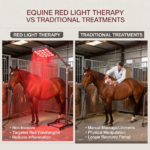

The short answer: it depends on the goal. Treatment frequency varies significantly based on whether you’re managing an acute injury, a chronic condition, or simply supporting performance and maintenance.
Here’s a practical breakdown of recommended protocols based on current equine therapy guidelines.
Acute Injuries (0–7 days)
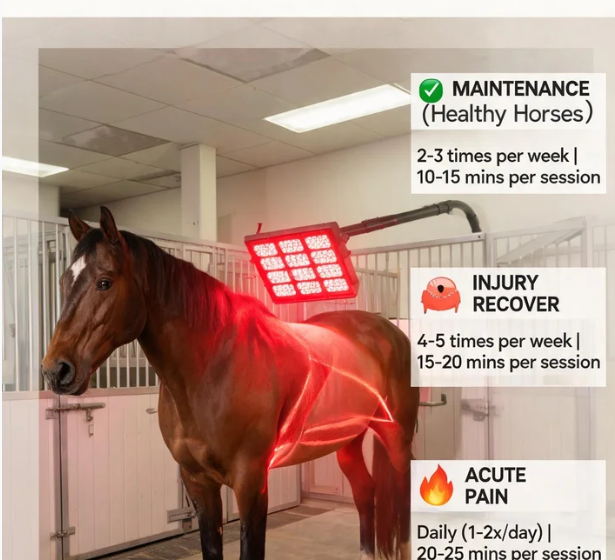
For fresh injuries like strains, sprains, or recent tendon damage, daily sessions are typically recommended during the first week. The goal is to reduce inflammation, manage pain, and prevent excessive scar tissue formation.
Some protocols suggest starting with 6–10 consecutive or every-other-day treatments, then evaluating progress before continuing. In more severe cases, such as deep tissue injuries, 35 consecutive daily sessions have been documented in clinical management.
Subacute & Chronic Conditions (1–4 weeks and beyond)
As the injury moves past the acute phase, or for ongoing issues like arthritis or recurrent tendon problems, frequency can be reduced.
| Phase | Frequency | Session Time |
|---|---|---|
| Subacute (1–4 weeks) | 3–5 sessions/week | 8–10 minutes |
| Chronic / Remodelling (4+ weeks) | 2–3 sessions/week | 5–8 minutes |
For chronic conditions like arthritis, treatments spaced a few days apart (e.g., 3 times per week) may be more effective than daily sessions. A full course for chronic issues often spans 24–36 total treatments over several weeks.
Pre- and Post-Performance Support
For competition horses, red light therapy can be used strategically around performance events:
- Pre-performance: 1–3 treatments before showing or competing to help prepare muscles and reduce injury risk.
- Post-performance: Apply immediately after exercise to minimise muscle damage, reduce oxidative stress, and speed up recovery.
Some protocols recommend 3 consecutive treatments prior to a competition for best results.
Maintenance Therapy
For ongoing joint health, senior horse care, or during heavy training cycles, a maintenance schedule can help sustain results:
Key Factors That Influence Frequency
Beyond the general guidelines above, several factors affect how often you should treat:
A Note on Wavelengths
While frequency refers to how often you treat, it’s worth noting that wavelength (measured in nanometres) also matters:
- Lower frequencies (630–680 nm): Better for deeper tissue penetration and longer-term pain management
- Higher frequencies (700–850 nm): More suited for surface-level conditions and acute injuries
Important Reminders
- Be patient: Quality tissue repair takes time. Don’t stop treatment just because the horse seems better after a few sessions.
- Clean the area: Light cannot penetrate through dirt, sweat, or mud.
- Protect eyes: Never shine the device directly into a horse’s eyes.
- Consult your vet: Red light therapy should complement—not replace—veterinary care.