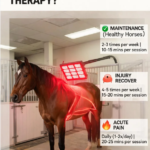
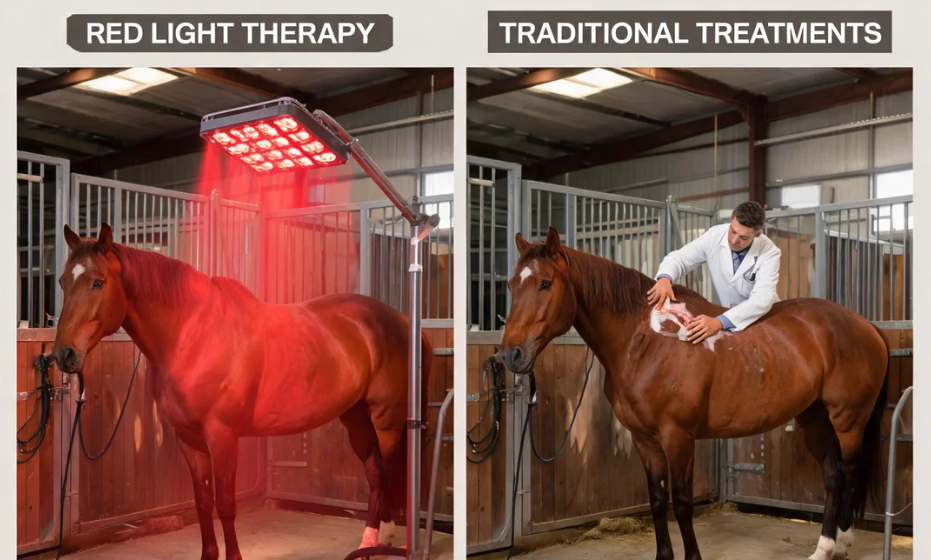

When a horse gets injured or shows signs of chronic discomfort, owners and trainers face a familiar question: What’s the best way to treat it?
Traditional treatments – medications, injections, rest, and physical therapies – have been the backbone of equine care for decades. But in recent years, red light therapy (photobiomodulation) has emerged as a powerful complement (and in some cases, an alternative) to these conventional methods.
Here’s how they compare – and why many equine professionals are now combining both for the best outcomes.
A Quick Look at Traditional Treatments
Before we dive into the comparison, let’s define what we mean by “traditional treatments”:
| Treatment Type | Examples | Primary Purpose |
|---|---|---|
| Medications | NSAIDs (e.g., Bute, Banamine), corticosteroids | Reduce pain and inflammation quickly |
| Injections | Joint injections (steroids, hyaluronic acid), IV regional perfusion | Target specific joints or soft tissue with high-dose medication |
| Physical Therapies | Cold/heat therapy, massage, stretching, controlled exercise | Manage swelling, improve range of motion, maintain fitness |
| Modalities | Shockwave therapy, therapeutic ultrasound, acupuncture | Stimulate healing through mechanical or electrical means |
| Surgery | Arthroscopy, tendon splitting | Repair structural damage |
These methods are effective and well-established, but they come with limitations – side effects, invasive procedures, downtime, and ongoing costs.
What Makes Red Light Therapy Different?
Red light therapy takes a completely different approach. Instead of suppressing symptoms or mechanically forcing healing, it stimulates the body’s own cellular repair mechanisms – supporting tissues to heal themselves from the inside out.
| Aspect | Red Light Therapy | Traditional Treatments |
|---|---|---|
| Mechanism | Boosts cellular energy (ATP) and stimulates natural healing | Blocks pain signals, reduces inflammation, or mechanically breaks down tissue |
| Invasiveness | Non-invasive, no needles or incisions | Often involves injections, oral medications, or surgery |
| Side Effects | Minimal to none (when used correctly) | NSAIDs can affect gut and kidneys; steroids may weaken tendons over time |
| Treatment Setting | Can be done at the stable or trackside | Often requires vet visits or clinic stays |
| Ongoing Costs | One‑time device investment + minimal electricity | Accumulated vet visits, medication refills, and repeated procedures |
| Recovery Downtime | No recovery downtime – can be used alongside daily routine | Some treatments require enforced rest or restricted movement |
| Application Speed | Quick sessions (5–12 minutes per area) | Can involve lengthy preparation, administration, or waiting periods |
Where Red Light Therapy Really Shines
While traditional treatments are essential in acute or severe cases, red light therapy offers distinct advantages that make it an increasingly popular choice:
1. No Drugs, No Withdrawal Concerns
For competition horses, medication rules are strict. Red light therapy is drug‑free and leaves no residue, making it safe to use right up to show day. This is a huge advantage over NSAIDs or corticosteroids, which often come with withdrawal periods.
2. It Addresses the Root Cause, Not Just Symptoms
NSAIDs and steroids primarily mask pain and inflammation. Red light therapy actually promotes tissue repair – improving collagen structure, blood flow, and cellular regeneration. You’re not just making the horse comfortable; you’re helping it heal properly.
3. Safe for Long‑Term Use
Traditional anti‑inflammatories can cause gastric ulcers, kidney issues, or joint cartilage damage with prolonged use. Red light therapy has no cumulative side effects, making it suitable for ongoing maintenance in senior horses or those with chronic conditions like arthritis.
4. Easy to Integrate into Daily Care
Portable devices mean treatments can happen during grooming, after exercise, or as part of a routine cool‑down. No scheduling vet visits, no stressful transport – just consistent, supportive care on your terms.
5. Cost‑Effective Over Time
While purchasing a quality device requires an upfront investment, the long‑term savings are substantial – especially for barns with multiple horses or frequent injuries. One device can serve many horses for years.
When Traditional Treatments Are Still Necessary
It’s important to be realistic: red light therapy is not a substitute for veterinary medicine in emergencies or severe injuries.
- Acute fractures – require surgical intervention and immobilisation.
- Severe tendon ruptures – may need surgery or intensive rehabilitation.
- Systemic infections – require antibiotics and veterinary monitoring.
- Advanced osteoarthritis – may benefit from joint injections alongside red light therapy.
Think of red light therapy as a powerful adjunct – it works with traditional treatments, not against them.
The Best Approach: Combining Both
The smartest equine professionals aren’t choosing between red light therapy and traditional treatments – they’re integrating them.
| Scenario | Suggested Combination |
|---|---|
| Acute tendon injury (first week) | Cold therapy + veterinary assessment + daily red light (to reduce inflammation and start cellular repair) |
| Chronic arthritis | Vet-prescribed joint supplements + occasional injections + regular red light maintenance (2–3x/week) |
| Post‑surgery recovery | Veterinary follow‑up + controlled exercise + red light (to minimise scar tissue and promote wound healing) |
| Pre‑competition prep | Red light therapy sessions (to prepare muscles and reduce injury risk) + regular training routines |
This integrated approach gives horses the best of both worlds: the immediate, targeted relief of conventional care, and the long‑term, cellular‑level support of light therapy.
What This Means for Your Brand
If you’re an ODM/OEM partner considering the equine therapy market, this comparison highlights a clear opportunity:
- Consumers are looking for drug‑free, safe, easy‑to‑use solutions to complement veterinary care.
- Red light therapy fills a gap that traditional treatments don’t cover – especially in maintenance, prevention, and daily recovery.
- Your product can be positioned not as a competitor to vets, but as an essential tool in a modern equine wellness kit.
We offer customisable devices that can be tailored to specific conditions – tendon recovery, joint health, wound healing, or general performance support. And we can help you tell that story with the science and warmth your customers will trust.
Final Thought
Traditional treatments aren’t going anywhere – and they shouldn’t. They remain critical for acute, severe, and life‑threatening conditions. But for the everyday aches, the chronic stiffness, and the recovery journeys that take time and patience, red light therapy offers something truly special: a way to support the horse’s own healing power, naturally, safely, and effectively.
If you’d like to learn more about how we can help you bring this technology to your market, we’d love to chat. No pressure – just a conversation about what’s possible. 😊