
Horse tendon injuries are among the most frustrating challenges faced by horse owners, trainers, and veterinarians. Whether a horse competes in show jumping, dressage, barrel racing, racing, or eventing, tendon injuries often require months of careful management and rehabilitation.
A damaged tendon can significantly affect performance, mobility, and long-term soundness. Fortunately, advances in equine rehabilitation have provided horse owners with more recovery options than ever before. Alongside veterinary treatment, controlled exercise, and proper nutrition, many rehabilitation programs now incorporate veterinary-grade red light therapy as part of a comprehensive recovery plan.
In this guide, we’ll explore the causes of tendon injuries, common treatment approaches, and how red light therapy may support the rehabilitation process.
Understanding Horse Tendon Injuries
Tendons are strong bands of connective tissue that attach muscles to bones. Their primary function is to transfer force and enable movement.
In horses, tendons endure tremendous stress during:
- Galloping
- Jumping
- Turning
- Collection work
- High-speed acceleration
- Repetitive training
Because of these demands, tendon injuries are particularly common in performance horses.
The most frequently affected structures include:
Superficial Digital Flexor Tendon (SDFT)
This tendon experiences significant strain during fast movement and jumping.
SDFT injuries are among the most common causes of lameness in athletic horses.
Deep Digital Flexor Tendon (DDFT)
The DDFT supports the lower limb and hoof.
Injuries often require extensive rehabilitation and careful management.
Suspensory Ligament Region
Although technically a ligament rather than a tendon, suspensory injuries are frequently managed using similar rehabilitation protocols.
Common Causes of Tendon Injuries
Tendon injuries rarely occur without a contributing factor.
Several common risk factors include:
Overtraining
Insufficient recovery time between workouts can gradually weaken tissues.
Repeated stress eventually exceeds the tendon’s ability to repair itself.
Poor Footing
Deep sand, uneven terrain, slippery surfaces, and hard ground all increase tendon strain.
Consistent training on appropriate footing reduces injury risk.
Inadequate Warm-Up
Cold muscles and tendons are less flexible.
Proper warm-up improves circulation and prepares tissues for exercise.
Sudden Changes in Workload
Rapid increases in training intensity are a major cause of soft tissue injuries.
Training programs should always progress gradually.
Age-Related Degeneration
As horses age, tendons naturally lose elasticity.
Older horses may require additional recovery support to maintain soundness.
Symptoms of a Horse Tendon Injury
Recognizing tendon injuries early can significantly improve recovery outcomes.
Common signs include:
Swelling
A noticeable enlargement along the tendon is often one of the first indicators.
Heat
Injured tendons frequently feel warmer than surrounding tissue.
Pain on Palpation
The horse may react when pressure is applied to the affected area.
Lameness
The severity can range from subtle gait changes to obvious limping.
Reduced Performance
Some horses show declining performance before obvious lameness develops.
Owners may notice:
- Shortened stride length
- Reluctance to jump
- Difficulty collecting
- Reduced stamina
Veterinary Diagnosis
Accurate diagnosis is essential.
A veterinarian may perform:
Physical Examination
Assessing heat, swelling, pain, and gait abnormalities.
Ultrasound Imaging
Ultrasound is commonly used to evaluate tendon fiber damage and monitor healing progress.
Advanced Imaging
In some cases, MRI or other diagnostic tools may be recommended.
Proper diagnosis allows veterinarians to design an individualized rehabilitation plan.
Traditional Treatment Options
Most tendon rehabilitation programs involve several components.
Rest
Initial rest helps protect damaged tissue during the early healing phase.
Controlled Exercise
As healing progresses, gradual movement becomes essential.
Controlled exercise supports:
- Circulation
- Tissue alignment
- Mobility
- Muscle maintenance
Anti-Inflammatory Management
Veterinarians may recommend specific treatments to control inflammation during recovery.
Supportive Bandaging
Bandages or therapeutic wraps may provide additional support during certain stages of rehabilitation.
Nutritional Support
A balanced diet helps provide the nutrients necessary for tissue repair and overall health.
Why Tendon Rehabilitation Takes So Long
Unlike muscles, tendons receive relatively limited blood supply.
As a result:
- Healing is slower
- Tissue remodeling takes months
- Re-injury risk remains elevated
Many tendon injuries require six months to a year before a horse can safely return to full athletic performance.
This is why structured rehabilitation is critical.
The Importance of Controlled Recovery
One of the biggest mistakes horse owners make is focusing only on healing the injury.
Successful rehabilitation must also maintain:
- Muscle strength
- Joint mobility
- Balance
- Cardiovascular fitness
A horse that loses overall fitness during recovery may face additional challenges when returning to work.
ow Red Light Therapy May Support Tendon Recovery
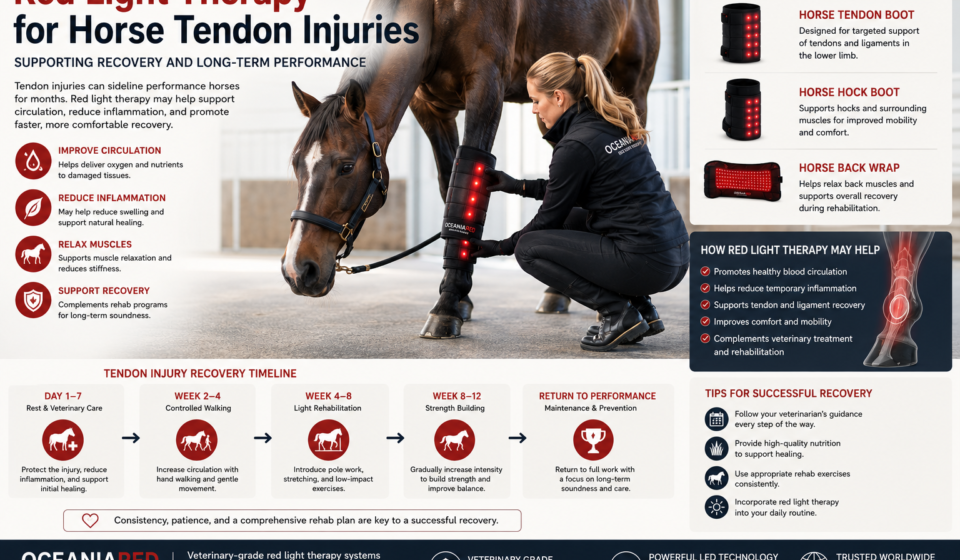
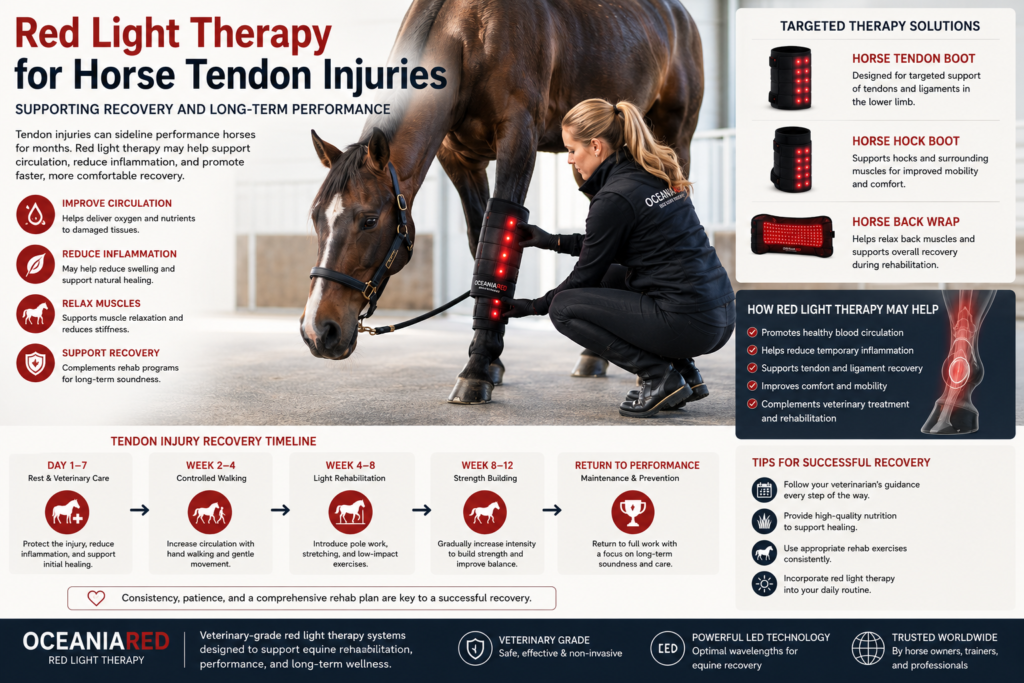
Recovering from a tendon injury requires patience and a carefully planned rehabilitation program. While controlled exercise, veterinary care, and proper nutrition remain the foundation of recovery, many horse owners and equine professionals also include red light therapy as part of a comprehensive wellness routine.
Red light therapy, also known as photobiomodulation (PBM), delivers specific wavelengths of red and near-infrared light to body tissues. Rather than producing heat, these wavelengths interact with cells and support normal biological processes associated with recovery.
Although red light therapy should never replace professional veterinary diagnosis or treatment, it has become increasingly popular in equine rehabilitation centers because it is non-invasive, drug-free, and easy to incorporate into daily care.
Potential benefits may include:
- Supporting healthy blood circulation
- Promoting muscle relaxation around injured tendons
- Helping maintain joint flexibility
- Supporting tissue recovery
- Reducing temporary muscle soreness after rehabilitation exercises
- Helping horses remain comfortable during long recovery periods
For many performance horses, consistent rehabilitation combined with appropriate therapy may contribute to a smoother return to work.
Why Circulation Matters During Tendon Healing
Tendons naturally receive less blood supply than muscles, which is one reason tendon injuries often require several months to heal.
Healthy circulation helps deliver oxygen and nutrients that support tissue repair while assisting the body’s normal recovery processes.
During rehabilitation, veterinarians often recommend activities that encourage circulation without placing excessive stress on healing structures.
These may include:
- Hand walking
- Controlled turnout
- Stretching exercises
- Gentle hill walking
- Veterinary-grade red light therapy
Supporting circulation throughout rehabilitation may help horses recover more comfortably.
Recommended OCEANIARED Products for Tendon Rehabilitation
Different stages of recovery may benefit from treating multiple areas rather than focusing only on the injured tendon.
Horse Tendon Boot
Designed specifically for the lower limb, the Horse Tendon Boot provides targeted red light therapy around common treatment areas.
It is ideal for:
- Tendon rehabilitation
- Ligament recovery
- Daily wellness routines
- Post-exercise recovery
Horse Hock Boot
Compensation patterns often increase stress on the hocks during rehabilitation.
Supporting the hock area may help improve overall comfort and movement.
Horse Back Wrap
During prolonged rehabilitation, horses frequently develop muscle tension across the back due to altered movement patterns.
Supporting the back muscles helps maintain overall mobility throughout recovery.
Sample Daily Tendon Recovery Routine
Below is an example of a structured daily recovery routine. Always adjust the program according to your veterinarian’s recommendations.
Morning
- Physical inspection
- Check for heat and swelling
- Clean the affected limb
- 15–20 minutes of controlled hand walking
Midday
- Rest
- Fresh water
- High-quality forage
- Electrolyte support if required
Afternoon
- Veterinary-approved rehabilitation exercises
- Pole walking if appropriate
- Stretching exercises
- Red light therapy session using the Horse Tendon Boot
Evening
- Light grooming
- Re-check the injured tendon
- Observe movement
- Allow adequate overnight rest
Consistency is often more important than intensity during tendon rehabilitation.
Weekly Rehabilitation Progression
Every horse recovers at a different pace, but many rehabilitation programs follow a gradual progression.
Weeks 1–2
- Stall rest
- Controlled hand walking
- Veterinary monitoring
- Red light therapy sessions
Weeks 3–6
- Increased walking
- Gentle pole work
- Muscle stretching
- Continued therapy
Weeks 7–12
- Walking under saddle if approved
- Light trotting
- Balance exercises
- Ongoing recovery monitoring
Months 3–6
- Progressive conditioning
- Increased cardiovascular exercise
- Sport-specific preparation
- Maintenance therapy
Always progress based on veterinary evaluation rather than a fixed timeline.
Common Mistakes During Tendon Rehabilitation
Returning to Competition Too Early
Even when lameness has disappeared, tendon fibers may still be remodeling.
Returning to competition too soon significantly increases the risk of re-injury.
Ignoring Warm-Up
Cold tendons are more vulnerable to strain.
Every rehabilitation session should begin with gentle walking.
Inconsistent Rehabilitation
Skipping exercise sessions or performing rehabilitation irregularly slows progress.
Consistency produces better long-term outcomes.
Overlooking Nutrition
Tendon healing requires adequate protein, vitamins, minerals, and hydration.
Nutrition remains an essential part of recovery.
Treating Only the Injury
Successful rehabilitation considers the entire horse.
Supporting the back, shoulders, hindquarters, and hocks helps maintain balanced movement patterns throughout recovery.
Frequently Asked Questions
Can tendon injuries heal completely?
Many horses successfully return to athletic work following tendon injuries, although recovery time varies depending on the severity of the injury and the rehabilitation program.
How long does tendon rehabilitation usually take?
Minor injuries may recover within several months, while severe tendon damage often requires six to twelve months of structured rehabilitation.
Can I continue riding during rehabilitation?
Only if your veterinarian recommends it.
Some horses begin with hand walking before gradually progressing to ridden work.
Is red light therapy safe for horses?
Veterinary-grade red light therapy is a non-invasive wellness modality commonly used by rehabilitation centers, veterinarians, and horse owners.
Always follow the manufacturer’s instructions and consult your veterinarian.
How often should red light therapy be used?
Treatment frequency depends on the horse’s condition and the device being used.
Many rehabilitation programs include multiple sessions each week.
Which horses benefit most from tendon therapy?
Common candidates include:
- Show jumping horses
- Dressage horses
- Barrel racing horses
- Racehorses
- Event horses
- Senior horses
- Horses recovering from surgery
Can red light therapy replace veterinary treatment?
No.
It should always be used alongside professional veterinary care rather than as a replacement.
Can therapy continue after the horse returns to work?
Yes.
Many owners continue maintenance therapy to support recovery after training sessions and competitions.
Conclusion
Horse tendon injuries require patience, careful planning, and a commitment to long-term rehabilitation. By combining veterinary guidance, controlled exercise, balanced nutrition, and supportive wellness technologies, horse owners can create an environment that encourages safe recovery and long-term soundness.
Red light therapy has become a valuable addition to many rehabilitation programs because it is non-invasive, easy to incorporate into daily care, and compatible with broader recovery strategies. When used responsibly, it can complement traditional rehabilitation practices and support overall equine wellness.
Explore OCEANIARED Equine Red Light Therapy
Featured Products
- Horse Tendon Boot
- Horse Hock Boot
- Horse Back Wrap
- Horse Head Wrap
- Horse Hoof Boot
Designed to support equine recovery, mobility, and performance with professional-grade technology.