
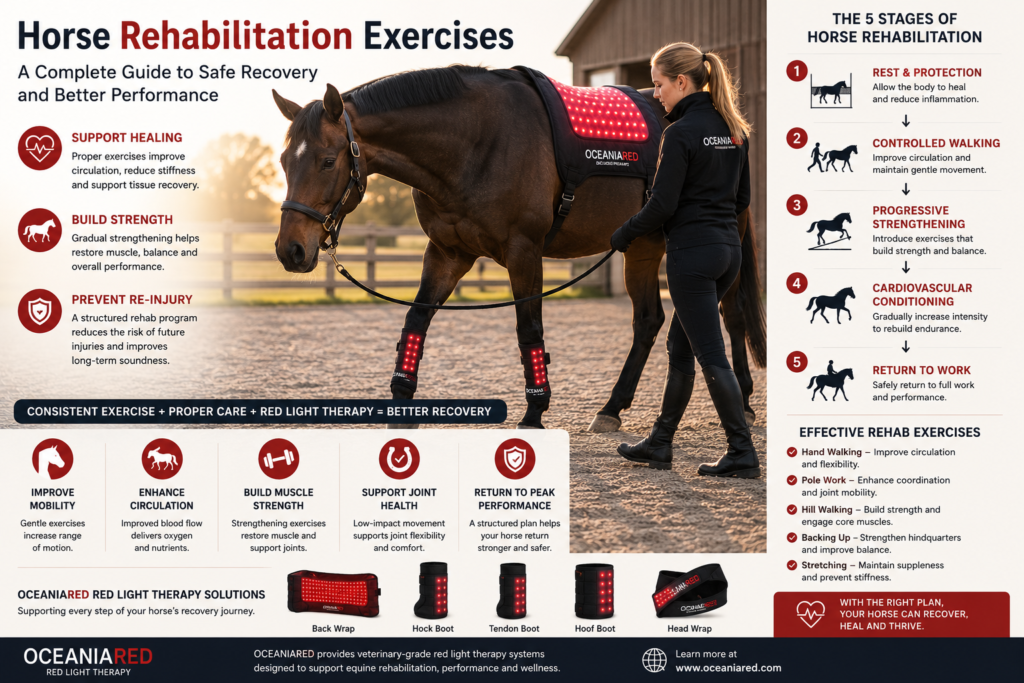
Horse rehabilitation is a crucial part of helping horses recover from injury, surgery, or extended periods of rest. Whether your horse is a high-performance athlete, a senior companion, or recovering from a tendon injury, a structured rehabilitation program can significantly improve mobility, reduce stiffness, and safely return the horse to normal activity.
Successful rehabilitation is not about rushing the process. Instead, it requires patience, consistency, and a combination of veterinary care, controlled exercise, proper nutrition, and supportive recovery technologies. One increasingly popular addition to modern rehabilitation programs is veterinary-grade red light therapy, which many horse owners and equine professionals include as part of a comprehensive recovery routine.
In this guide, we’ll explain how horse rehabilitation works, when rehabilitation exercises are necessary, and how to create a practical recovery plan that supports long-term equine health.
Why Horses Need Rehabilitation
Horses are powerful athletes, but their muscles, tendons, ligaments, and joints experience significant stress throughout training, competition, transportation, and everyday work. When injuries occur, simply allowing the horse to rest is often not enough.
Without appropriate rehabilitation, horses may experience:
- Muscle atrophy
- Reduced flexibility
- Joint stiffness
- Poor circulation
- Loss of balance
- Reduced athletic performance
- Increased risk of re-injury
A structured rehabilitation program helps restore strength while allowing injured tissues to heal safely.
Common Situations That Require Rehabilitation
Horse rehabilitation exercises may be recommended after:
Tendon and Ligament Injuries
Flexor tendon injuries remain one of the most common orthopedic problems in performance horses. Controlled rehabilitation helps gradually rebuild strength while protecting healing tissue.
Joint Problems
Older horses or horses suffering from osteoarthritis often benefit from low-impact movement that maintains joint mobility without excessive stress.
Back Pain
Poor saddle fit, overtraining, and muscular strain can all contribute to back soreness. Rehabilitation exercises improve flexibility while strengthening supporting muscles.
Surgery Recovery
Following orthopedic surgery, rehabilitation is essential for restoring movement without compromising healing.
Long-Term Stall Rest
After weeks or months of limited movement, horses lose muscle mass quickly. Progressive rehabilitation restores fitness safely.
Goals of Horse Rehabilitation
Every rehabilitation program should focus on several key objectives:
Improve Range of Motion
Healthy joints require regular movement. Gentle exercises prevent stiffness while improving flexibility.
Rebuild Muscle Strength
Muscles weaken rapidly during inactivity. Controlled exercise gradually restores strength.
Increase Circulation
Improved blood flow delivers oxygen and nutrients to healing tissues while helping remove metabolic waste.
Restore Balance
Balance exercises improve coordination and reduce unnecessary stress on injured limbs.
Prevent Secondary Injuries
A carefully planned recovery minimizes compensation injuries caused by uneven movement patterns.
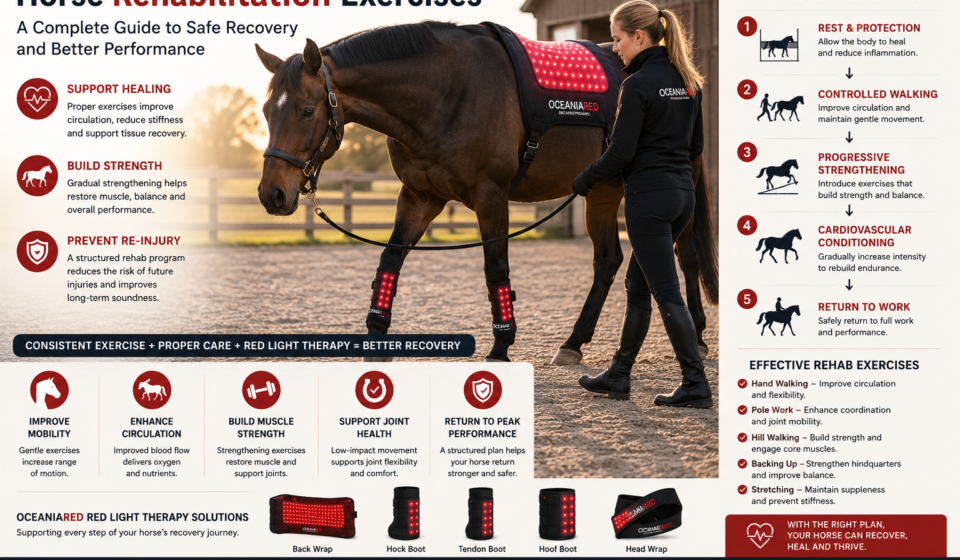
The Five Stages of Horse Rehabilitation
Stage 1 — Rest and Protection
Immediately following an injury or surgery, rest is often the priority.
During this period:
- Follow veterinary instructions
- Limit unnecessary movement
- Control inflammation
- Maintain hydration
- Monitor swelling
This stage may last several days or several weeks depending on the condition.
Stage 2 — Controlled Walking
Once approved by your veterinarian, walking becomes the foundation of rehabilitation.
Benefits include:
- Improved circulation
- Gentle joint lubrication
- Reduced muscle stiffness
- Mental stimulation
Typical recommendation:
10–20 minutes of hand walking once or twice daily.
Stage 3 — Progressive Strengthening
As healing progresses, exercises become more challenging.
Examples include:
- Walking over ground poles
- Gentle hill walking
- Large circle work
- Straight-line walking
- Backing up several steps
These exercises activate stabilizing muscles without excessive concussion.
Stage 4 — Cardiovascular Conditioning
After adequate healing, horses gradually return to more demanding exercise.
Typical progression:
- Walking
- Trotting
- Extended trotting
- Controlled canter
- Sport-specific training
Progression should always follow veterinary recommendations rather than a fixed timeline.
Best Rehabilitation Exercises for Horses
Hand Walking
One of the safest and most effective rehabilitation exercises.
Benefits include:
- Encourages circulation
- Improves flexibility
- Prevents stiffness
- Maintains mental wellbeing
Pole Walking
Ground poles encourage horses to lift their limbs more deliberately.
This exercise improves:
- Coordination
- Joint mobility
- Core stability
- Proprioception
Start with only a few poles placed on flat ground before increasing difficulty.
Hill Walking
Walking uphill strengthens the hindquarters and core muscles while minimizing excessive impact.
Downhill walking should be introduced carefully, as it places greater stress on the front limbs.
Backing Exercises
Walking backward for several controlled steps activates muscles that are often underused during normal movement.
Benefits include:
- Improved balance
- Stronger hindquarters
- Increased core engagement
How Red Light Therapy Supports Horse Rehabilitation
Horse rehabilitation involves much more than simply allowing injured tissues to heal. Successful recovery requires consistent support for healthy circulation, muscle function, flexibility, and overall comfort. This is one reason why many veterinarians, rehabilitation centers, and performance horse owners include red light therapy as part of a comprehensive rehabilitation program.
Red light therapy, also known as photobiomodulation (PBM), uses specific wavelengths of red and near-infrared light to stimulate cellular activity. Rather than generating heat, these wavelengths penetrate tissue and support normal biological processes involved in recovery.
While red light therapy should never replace veterinary diagnosis or treatment, it can be a valuable complementary tool during rehabilitation.
Potential benefits may include:
- Supporting healthy blood circulation
- Helping relax tight muscles
- Supporting normal joint mobility
- Encouraging recovery after exercise
- Reducing temporary muscle soreness
- Promoting overall equine wellness
Many horse owners choose to incorporate therapy sessions into their horse’s daily rehabilitation schedule following veterinary recommendations.
Best Areas to Apply Red Light Therapy
The treatment area depends on each horse’s condition. Some of the most common applications include:
Horse Back
The back is one of the largest muscle groups in the horse and often experiences fatigue after training or competition.
Benefits of treating the back may include:
- Supporting muscle relaxation
- Helping reduce post-exercise stiffness
- Promoting recovery after intensive work
Recommended Product: Horse Back Wrap
Horse Neck
Neck muscles work continuously during riding and transport.
Therapy may help:
- Support flexibility
- Promote muscle relaxation
- Improve comfort during rehabilitation
Horse Hocks
The hock joints absorb significant impact during movement.
Owners commonly include hock therapy when managing:
- Joint stiffness
- Older horses
- Performance recovery
- Rehabilitation programs
Recommended Product: Horse Hock Boot
Tendons
Tendon injuries require careful veterinary management and controlled rehabilitation.
Many rehabilitation centers include light therapy alongside prescribed rehabilitation exercises.
Recommended Product: Tendon Boot
Hooves
Healthy circulation is important for hoof health.
Horse owners may include hoof therapy during wellness routines for horses with demanding training schedules.
Recommended Product: Horse Hoof Boot
Sample Weekly Rehabilitation Plan
Monday
- 20-minute hand walk
- Back stretching
- Red light therapy on the back and hocks
- Fresh water and electrolyte support
Tuesday
- Walking over ground poles
- Neck mobility exercises
- Red light therapy on tendons
- Rest
Wednesday
- Straight-line walking
- Gentle hill walking
- Full-body grooming
- Therapy session
Thursday
- Light ridden walking (if approved)
- Muscle stretching
- Recovery therapy
Friday
- Pole exercises
- Balance training
- Hock treatment
Saturday
- Easy trail walking
- Relaxation day
- Therapy session
Sunday
- Rest
- Health inspection
- Hoof care
- Recovery treatment
Common Rehabilitation Mistakes
Many rehabilitation programs fail because owners return horses to work too quickly.
Avoid these common mistakes:
Doing Too Much Too Soon
Healing tissues need time to regain strength.
Increasing workload too quickly increases the risk of re-injury.
Skipping Warm-Up
Even horses in rehabilitation require proper warm-up before exercise.
Gentle walking prepares muscles and joints for movement.
Inconsistent Exercise
Rehabilitation works best when performed consistently.
Several short sessions each week are generally more beneficial than one long workout.
Ignoring Nutrition
Recovery requires:
- High-quality forage
- Balanced minerals
- Adequate protein
- Proper hydration
Missing Veterinary Check-Ups
Regular examinations help determine when exercise intensity should increase.
Frequently Asked Questions
How soon can rehabilitation begin after an injury?
The rehabilitation timeline depends entirely on the diagnosis. Always follow your veterinarian’s recommendations before beginning any exercise program.
How long does horse rehabilitation usually take?
Recovery time varies depending on the injury. Minor muscle strains may recover within weeks, while tendon or ligament injuries can require several months of structured rehabilitation.
Can older horses benefit from rehabilitation exercises?
Yes. Gentle, low-impact exercise helps maintain mobility, muscle strength, and overall quality of life in many senior horses.
Should rehabilitation exercises be done every day?
Many horses benefit from consistent daily movement, but the intensity should be adjusted according to veterinary guidance and the individual horse’s condition.
Is red light therapy safe for horses?
Veterinary-grade red light therapy is widely used as a non-invasive wellness modality. Always use the device according to the manufacturer’s instructions and your veterinarian’s recommendations.
Can red light therapy replace veterinary treatment?
No. Red light therapy should be used as a complementary wellness tool and should never replace professional veterinary diagnosis or medical treatment.
Which areas respond best to therapy?
Common treatment areas include:
- Back
- Neck
- Shoulders
- Hocks
- Tendons
- Fetlocks
- Hooves
The most appropriate treatment area depends on the horse’s individual needs.
How often should therapy be used?
Frequency varies depending on the horse’s condition and the specific device. Follow the manufacturer’s instructions and consult your veterinarian for an appropriate treatment schedule.
Conclusion
Horse rehabilitation is a gradual process that requires patience, consistency, and a well-planned recovery strategy. Controlled exercise, balanced nutrition, regular veterinary evaluations, and supportive wellness technologies all play an important role in helping horses regain strength and mobility.
For performance horses, rehabilitation is not only about returning to work—it is about returning safely and reducing the risk of future injury. Incorporating evidence-informed practices into a daily rehabilitation routine can help support long-term equine health and athletic performance.
Many owners, trainers, and rehabilitation professionals choose to include veterinary-grade red light therapy as part of their overall recovery plan to complement traditional rehabilitation methods.
Explore OCEANIARED Equine Red Light Therapy
Our product range includes:
- Horse Back Wrap
- Horse Head Wrap
- Horse Hock Boot
- Horse Tendon Boot
- Horse Hoof Boot
Designed for equine rehabilitation centers, veterinary clinics, professional trainers, distributors, and horse owners worldwide.
Explore our full product range and discover how OCEANIARED supports equine recovery and wellness.