
Performance horses are elite athletes. They push their bodies to the limit – jumping, galloping, turning, and stopping with power and precision. But with that intensity comes wear and tear. The difference between a good performance horse and a great one often comes down to one thing: how well they recover.
Recovery isn’t just about resting. It’s about actively supporting the body to repair, rebuild, and come back stronger. In this guide, we’ll explore the most effective recovery methods for performance horses – and show you how red light therapy fits into a modern, holistic approach.
Why Recovery Matters for Performance Horses
When a horse works hard, several things happen:
- Muscle fibres experience micro-tears.
- Inflammation rises as part of the healing response.
- Lactic acid and other metabolic waste accumulate.
- Joints and tendons endure repetitive stress.
Without proper recovery, these small issues accumulate – leading to stiffness, reduced performance, and eventually, injury. Smart recovery protocols help horses:
- Return to peak condition faster.
- Reduce the risk of overuse injuries.
- Maintain a positive, willing attitude.
- Extend their competitive careers.
The Recovery Toolkit: What Works Best
There’s no single “magic bullet” for recovery. The best approach combines several methods, each targeting different aspects of the healing process.
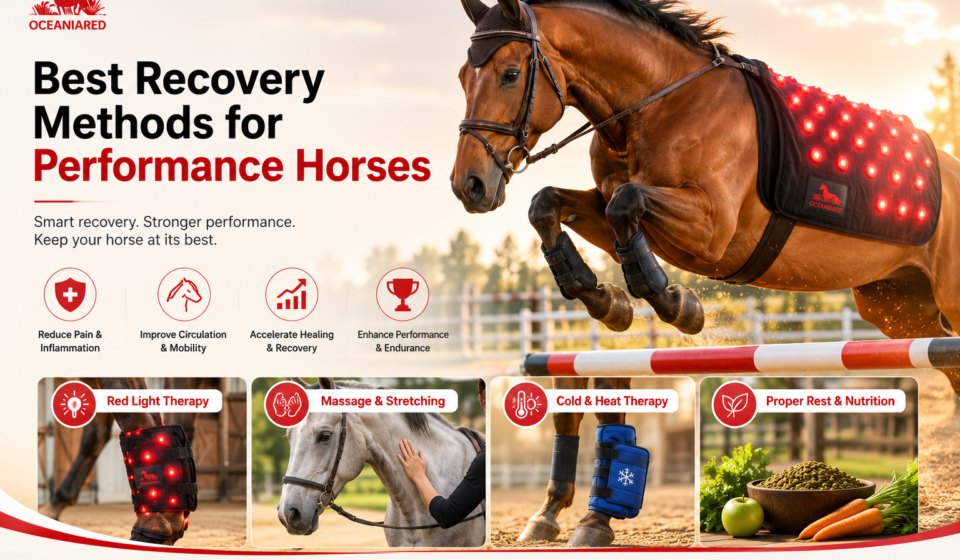
1. Red Light Therapy (Photobiomodulation)
Red light therapy has quickly become a favourite among performance horse trainers – and for good reason.
How it helps:
- Speeds muscle repair – boosts cellular energy (ATP) to accelerate tissue regeneration.
- Reduces inflammation – modulates inflammatory responses without drugs.
- Relieves pain naturally – blocks pain signals and releases endorphins.
- Improves circulation – encourages new capillary growth, delivering oxygen and nutrients to tired tissues.
Best for: Post-exercise recovery, treating minor strains, managing chronic joint issues, and preventing injuries.
Typical protocol: 10–12 minutes per area, immediately after work or on rest days. Portable devices make it easy to use at the stable or trackside.
2. Cold Therapy (Ice / Cold Water / Cold Spas)
Cold therapy is one of the oldest and most effective ways to manage acute inflammation.
How it helps:
- Constricts blood vessels, reducing swelling and fluid accumulation.
- Numbs nerve endings, providing immediate pain relief.
- Slows metabolic activity, which can limit secondary tissue damage.
Best for: Immediately after intense exercise, or for acute injuries (first 24–48 hours).
Common methods: Ice boots, cold hosing, or cold water spas. A typical session lasts 10–20 minutes.
Note: Cold therapy is excellent for acute inflammation, but it doesn’t promote tissue repair – that’s where heat and light therapies come in.
3. Heat Therapy
Heat therapy is the natural counterpart to cold. While cold reduces inflammation, heat encourages healing.
How it helps:
- Dilates blood vessels, increasing blood flow to the area.
- Relaxes tight muscles and reduces spasms.
- Increases tissue elasticity, making stretching more effective.
Best for: Chronic stiffness, muscle tightness, and pre-exercise warm-up.
Common methods: Warm towels, heat packs, or heated wraps. Sessions typically last 15–20 minutes.
4. Controlled Exercise and Hand Walking
Rest is important, but complete immobilisation can actually delay recovery. Gentle, controlled movement helps:
- Maintain joint mobility.
- Promote circulation and lymphatic drainage.
- Prevent muscle atrophy during injury rehab.
Best for: All stages of recovery – from injury rehab to post-competition cool-down.
Typical approach: 10–20 minutes of hand walking, gradually increasing as the horse improves. Follow your vet or physiotherapist’s guidance.
5. Massage and Physiotherapy
Manual therapies are invaluable for performance horses. A skilled equine physiotherapist or massage therapist can:
- Release muscle tension and trigger points.
- Improve range of motion.
- Identify early signs of compensation or imbalance.
Best for: Ongoing maintenance, post-competition, and injury rehabilitation.
Frequency: Weekly sessions during heavy training; more frequently during recovery phases.
6. Stretching (Carrot Stretches and Passive Stretching)
Stretching is simple but highly effective. Encouraging your horse to stretch its neck, back, and limbs helps:
- Maintain flexibility and suppleness.
- Reduce stiffness after hard work.
- Prevent muscle adhesions.
Best for: Daily use, especially after exercise.
Examples: Carrot stretches (asking the horse to reach down between its front legs, to its chest, and to its flanks). Passive limb stretches (carefully extending each leg forward and backward).
7. Nutritional Support
Recovery isn’t just external – it starts from the inside.
Key nutrients for recovery:
- High-quality protein – provides amino acids for muscle repair.
- Omega-3 fatty acids – reduce inflammation and support joint health.
- Vitamin E and selenium – antioxidants that protect cells from oxidative damage.
- Electrolytes – replenish what’s lost through sweat.
- Joint supplements – glucosamine, chondroitin, MSM, and hyaluronic acid.
Best for: Ongoing daily nutrition, with adjustments during heavy training or competition periods.
Tip: Always consult an equine nutritionist for a tailored feeding plan.
8. Proper Turnout and Rest
Never underestimate the power of a good roll in the paddock!
How it helps:
- Allows natural movement patterns that promote joint health.
- Reduces mental stress and boredom.
- Encourages natural rest and sleep cycles.
Best for: Daily, alongside structured exercise and recovery protocols.
Putting It All Together: A Sample Recovery Routine
Here’s how a typical recovery day might look for a performance horse after a hard training session:
| Time | Activity |
|---|---|
| Immediately after exercise | 10–15 minutes of hand walking to cool down. |
| Post-cool-down | Cold therapy (ice boots or hosing) on legs for 15 minutes to reduce inflammation. |
| 30–60 minutes later | Red light therapy on key areas (back, shoulders, hindquarters) for 10–12 minutes per area. |
| Evening | Gentle stretching (carrot stretches) and a thorough massage or physio session (if scheduled). |
| Nutrition | Electrolytes in feed; high-quality hay and a balanced concentrate with recovery-specific supplements. |
| Rest day | Light turnout in a paddock; no structured work. |
Where Red Light Therapy Fits in the Recovery Toolkit
As you can see, red light therapy isn’t a replacement for other recovery methods – it’s a powerful complement that enhances everything else.
| Recovery Method | What It Does Best | Where Red Light Complements It |
|---|---|---|
| Cold therapy | Reduces acute inflammation | Red light promotes healing after cold therapy |
| Heat therapy | Increases blood flow | Red light extends blood flow benefits while promoting cellular repair |
| Massage | Releases muscle tension | Red light reduces inflammation, making massage more comfortable |
| Stretching | Improves flexibility | Red light relaxes muscles, making stretches more effective |
| Nutrition | Provides building blocks | Red light supports nutrient uptake at the cellular level |
For ODM/OEM Partners: A Market with Real Demand
Performance horse owners are among the most invested – and discerning – customers in the equine industry. They’re looking for recovery solutions that are:
- Science-backed – proven to work.
- Convenient – easy to use in a busy stable environment.
- Drug-free – safe for competition horses.
- Cost-effective – a worthwhile investment over time.
What we can offer you:
- Custom-designed devices – choose wavelengths, power output, and treatment heads that suit your target audience.
- Private labelling – your brand identity on every product.
- Full technical support – from prototyping to certification (CE, FCC, RoHS).
- Flexible MOQ – we welcome small trial orders and scale with you.
We’re not just suppliers – we’re your partners in bringing effective, trusted recovery solutions to the performance horse market.
A Final Word
Recovery is not a luxury – it’s a necessity for horses that give their all. By combining the best of traditional methods with modern, science-backed tools like red light therapy, you can help your horses recover faster, perform better, and stay sound for longer.
If you’d like to learn more about our red light therapy devices, discuss customisation options, or simply have a chat about what recovery solutions might suit your market, we’d love to hear from you. Let’s help performance horses be their best – together. 😊